Weather
What to Wear by Temperature: A Complete Weather Outfit Guide
What to wear in 30, 50, 60, 70 or 80 degree weather: a clear °F and °C chart, plus how to dress for rain, wind and days that swing warm and cold.
The forecast says 58°F. Is that a jacket day? A sweater day? Both? Dressing for the weather is one of the most common daily decisions people get wrong, either shivering at the bus stop or sweating through a meeting.
This guide gives you a simple temperature chart in Fahrenheit and Celsius, then covers the things a number alone doesn't tell you: wind, rain, sun and days that swing 15 degrees between morning and evening.
The temperature outfit chart
Use the feels-like temperature, not the headline number. Wind can make 45°F feel like 38°F, and humidity can make 80°F feel like 88°F.
| Feels like | What to wear |
|---|---|
| Below 20°F (below −7°C) | Thermal base layer, thick knit, insulated or down coat, warm trousers, insulated waterproof boots, hat, gloves and scarf |
| 20–32°F (−7 to 0°C) | Sweater or fleece over a long-sleeve top, wool or down coat, jeans or lined trousers, boots, hat and gloves |
| 32–45°F (0 to 7°C) | Knit sweater, wool coat or padded jacket, jeans or wool trousers, boots or leather shoes, a scarf |
| 45–55°F (7 to 13°C) | Long-sleeve shirt or light knit, a medium jacket (leather, quilted, trench), jeans or chinos, closed shoes |
| 55–65°F (13 to 18°C) | T-shirt or shirt plus a light layer (denim jacket, cardigan, overshirt), jeans, chinos or a midi skirt, sneakers or loafers |
| 65–75°F (18 to 24°C) | T-shirt, shirt or light dress, no jacket needed in the sun, chinos, jeans or skirts, sneakers |
| 75–85°F (24 to 29°C) | Breathable cotton or linen, short sleeves, shorts, light trousers or airy dresses, sandals or canvas shoes |
| Above 85°F (above 29°C) | Loose linen, light colours, the least fabric you're comfortable in, a hat and sunglasses |
These ranges are a starting point. If you run cold, shift everything one row up.
Dressing for specific temperatures
What to wear in 40 degree weather (4°C)
This is proper coat weather. A wool overcoat or padded jacket over a sweater is ideal. Jeans are fine if it's dry; add boots with some grip if there's frost. Gloves become worth carrying.
What to wear in 50 degree weather (10°C)
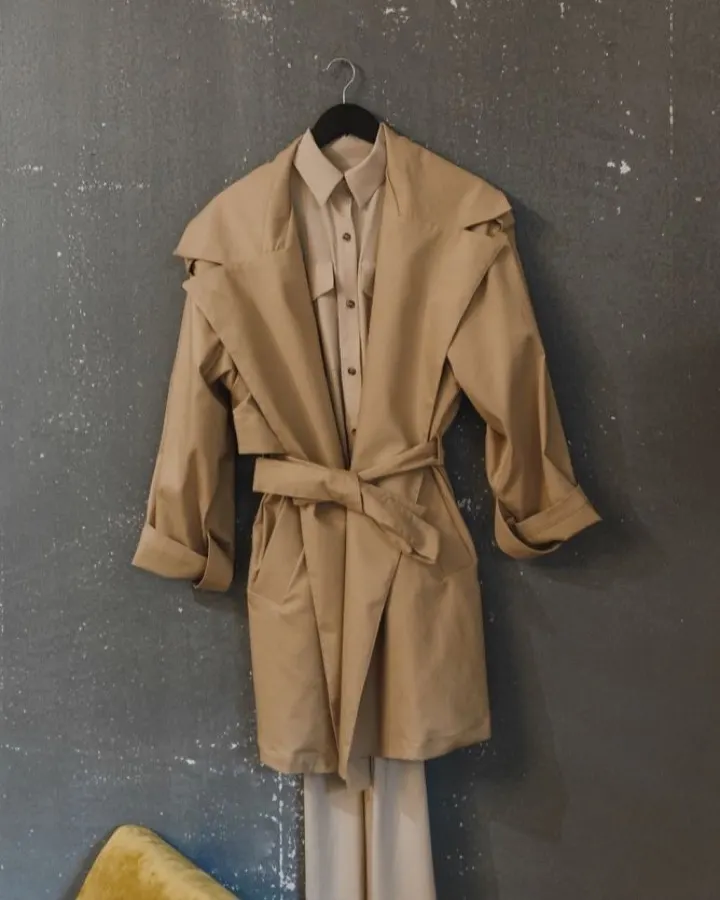
The trickiest range for most people. A light knit or flannel shirt under a trench, leather jacket or quilted jacket works well. You'll probably want closed shoes. If you'll be outside after dark, choose the warmer option.
What to wear in 60 degree weather (15°C)
Layering season. Start with a T-shirt or shirt and add one light layer you can take off: a denim jacket, an overshirt or a cardigan. Sun makes 60°F feel warm; shade and wind make it feel cool. Bring the layer.
What to wear in 70 degree weather (21°C)
Most people's favourite. A T-shirt with jeans or chinos, a casual dress, or a light shirt with the sleeves rolled. No jacket needed during the day, but a light layer is useful in air-conditioned offices.
What to wear in 80 degree weather (27°C)
Choose breathable natural fabrics such as cotton and linen, and lighter colours, which reflect more sunlight. Shorts, light trousers, skirts and sundresses are all comfortable. Avoid heavy denim and polyester, which trap heat.
Beyond temperature: rain, wind and sun
Rain
A trench coat or a light waterproof shell over your usual outfit is the simplest fix. Swap suede and canvas shoes for leather boots or waterproof sneakers, and avoid trousers that drag on the ground. Darker colours hide splashes better than light ones.
Wind
Wind cuts through knitwear. On windy days a tightly woven outer layer (a trench, a leather jacket, a shell) does more than a thicker sweater. A scarf protects the gap at your neck where most heat escapes.
Strong sun
Light, loose fabrics keep you cooler than tight ones. Linen and cotton breathe; most synthetics don't. A hat and sunglasses matter more than another layer of sunscreen on your forehead.
Days that start cold and end warm
Spring and autumn often swing 15–20°F between 8 am and 3 pm. The answer is layers you can remove without ruining the outfit:
- Base: a T-shirt or shirt that looks complete on its own.
- Middle: a cardigan, overshirt or light knit you can tie around your shoulders or carry.
- Outer: a light jacket or trench for the morning commute.
Choose a base that works as an outfit by itself, because that's what you'll be wearing by the afternoon.
Letting the forecast pick for you
Checking the forecast and then mentally scanning your closet every morning is exactly the kind of decision an app can make for you. Wearly reads your local forecast, including feels-like temperature, rain and wind, and builds complete outfits from your own clothes with the right warmth for the day. Each garment has a warmth rating, so a chunky knit never shows up on an 80°F afternoon.
If you're planning a week, see our guide on how to plan outfits for the week. If you're travelling, packing light for a 7-day trip covers dressing for a destination's weather.
Quick summary
- Dress for the feels-like temperature.
- Between 45°F and 65°F, layers beat one heavy piece.
- For rain and wind, a woven outer layer matters more than thickness.
- In heat, choose loose, light, natural fabrics.
- If the day swings, make sure your base layer works on its own.